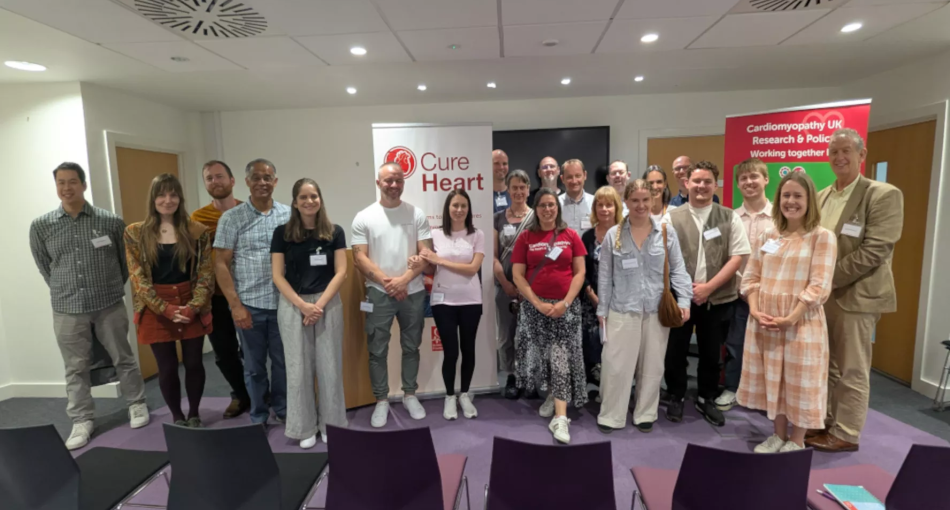
Recently, a group of our staff, supporters, and research network members headed to Oxford to see this ground-breaking work in action.
One of those visitors was Matthew Tosh, who also happens to live with cardiomyopathy. Here’s his take on what turned out to be a truly unforgettable day.
Cutting-edge science, made real
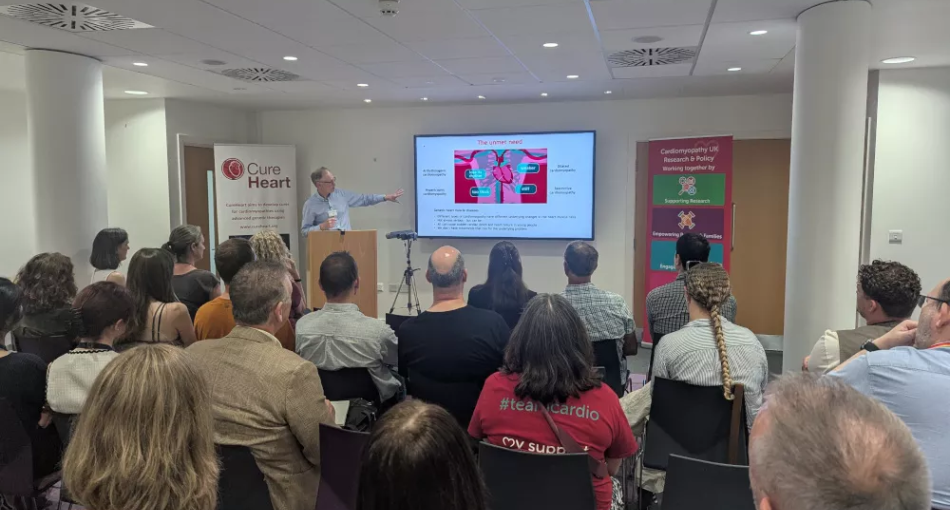
Thanks to Cardiomyopathy UK, I had the rare chance to step inside the CureHeart research labs. The day kicked off with a warm welcome from Professor Hugh Watkins, who brought us up to speed on the latest approaches to tackling inherited cardiomyopathies.
We learned about “permanent edits” to DNA using viral vectors – a bit like fixing a typo in your genetic code – and antisense oligonucleotides (or ASOs for short), which work like precision on/off switches to silence faulty gene messages. The best bit? They can be switched back on again if needed – a reassuring safety net.
Lunchtime learning – and lightbulb moments
Over lunch, the researchers shared posters about ASOs, base editing (which can change just one letter of DNA), and BOLD MRI – a clever scanning method that can pick up tiny changes in heart muscle before standard scans can. The scientists were brimming with enthusiasm, making even the trickiest concepts easy to grasp.
The lab tour – and the most inspiring moment
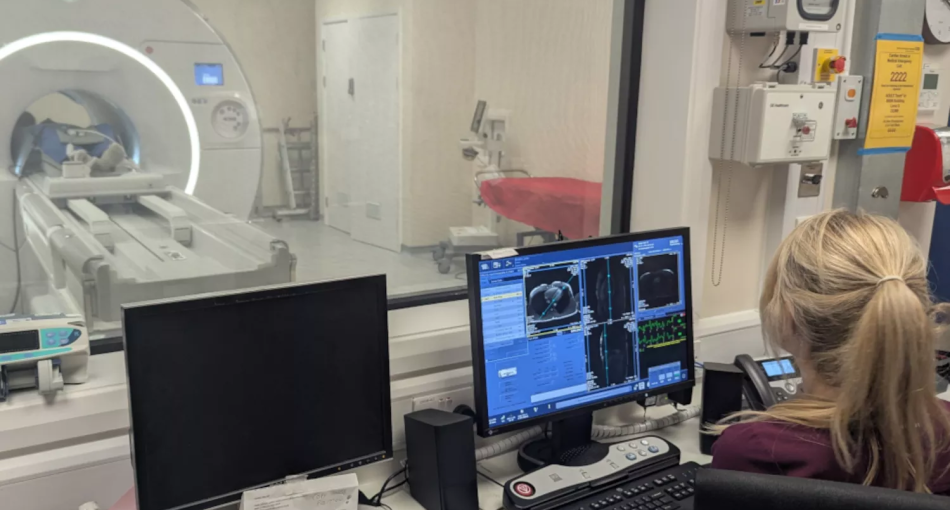
Some of the group got to explore the cardiac MRI scanner. I couldn’t join them (ICDs and MRI machines aren’t a good mix), but the rest of the tour was more than enough to keep me hooked.
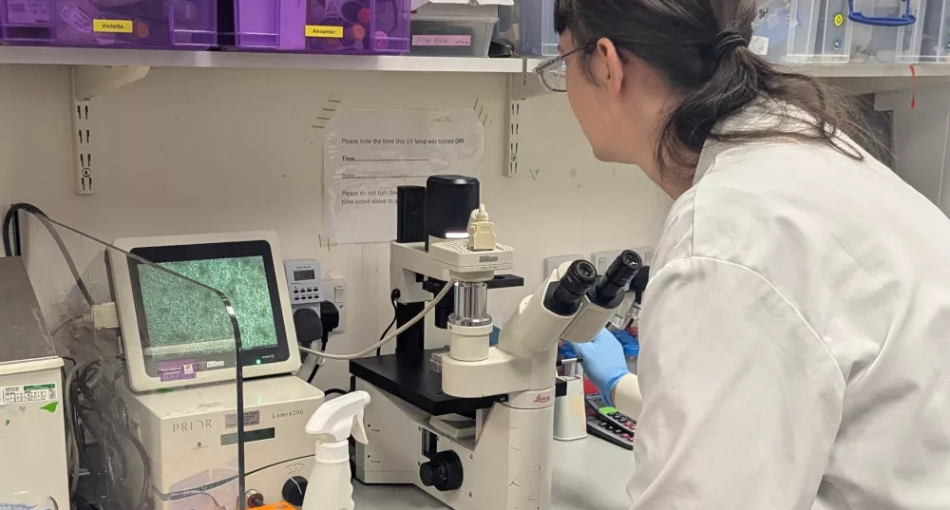
The moment I’ll never forget? Peering down a microscope at lab-grown human heart muscle cells – cardiomyocytes – twitching in unison. It was hypnotic. These tiny, living cells, beating away in their nutrient broth, are the very foundation of every single heartbeat. I’ve got a scientific background, but it still hit me right in the chest – a mix of awe, wonder, and sheer gratitude.
Why this matters for all of us
If your cardiomyopathy has a known genetic cause, these breakthroughs could one day fix the problem right at the source. And if, like me, your genetic cause is still a mystery, there’s still every reason to feel hopeful. Research is moving faster than ever – and each new discovery opens more doors.
Walking away inspired
The CureHeart team’s passion and openness made the science feel personal, not just technical. I left feeling energised, hopeful, and proud to know that patients and researchers are walking this road together.
If you ever get the chance to see research up close – take it. Because sometimes, one moment of wonder – like seeing those beating cells – is all it takes to spark a whole new sense of hope.